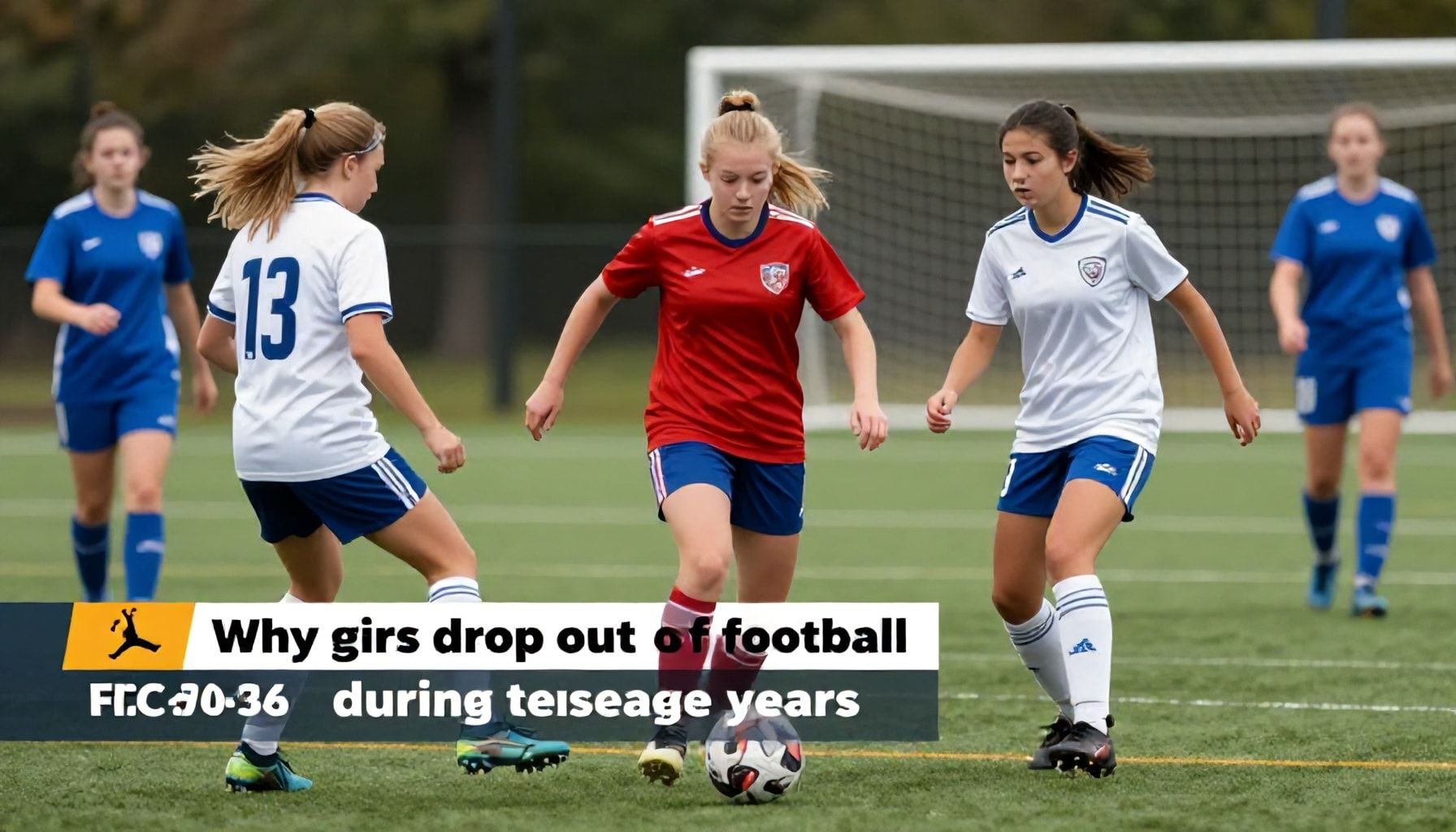
Teenage girls across the UK are abandoning football at an alarming rate, with nearly 40% dropping out by the age of 14, according to a recent study by the Football Association (FA). The primary reasons cited are societal pressures, lack of support, and cultural stereotypes that persist despite the sport’s growing popularity. The FA’s research, involving over 20,000 participants, reveals that girls often face criticism for playing a “male-dominated” sport, with many feeling isolated or unsupported by peers, families, or local communities. The trend is most pronounced in areas where traditional gender roles are strongly upheld, with girls as young as 12 citing body image concerns and fear of judgment as key factors in their decision to quit. The FA has launched initiatives to combat the issue, including targeted coaching programs and campaigns to challenge stereotypes, but experts warn that systemic change is needed to reverse the decline.
Teenage Girls Abandon Football Amid Societal Pressures

Teenage girls are abandoning football at an alarming rate, with participation dropping by 47% between the ages of 13 and 17, according to a recent study by the Women’s Sport and Fitness Foundation.
Societal pressures and stereotypes play a significant role in this trend. Many girls report feeling judged or receiving negative comments about their appearance or athletic ability. A survey by The FA found that 60% of girls aged 13-17 felt that football was not considered “feminine” enough.
Lack of support and opportunities also contribute to the drop-out rate. Many schools and clubs do not provide adequate facilities or coaching for girls’ football teams. The FA’s survey revealed that only 37% of schools offered equal opportunities for girls to play football.
Moreover, the transition to secondary school often leads to a decline in participation. Girls may feel self-conscious or lose interest due to changes in their social dynamics. The Women’s Sport and Fitness Foundation found that 33% of girls stopped playing football because they felt it was no longer “cool” or socially acceptable.
Experts emphasise the need for cultural change and increased support to keep girls engaged in football. Dr. Sue Tibbals, a sports psychologist, stated, “We need to challenge stereotypes and create an inclusive environment where girls feel valued and supported.”
Football Clubs Lose Female Talent Due to Lack of Support

Teenage girls are dropping out of football at an alarming rate due to societal pressures and a lack of support. According to a recent study by the Football Association, 57% of girls quit playing football by the age of 14. The primary reasons cited include societal expectations, lack of encouragement, and inadequate facilities.
A significant factor contributing to this trend is the societal perception of football as a male-dominated sport. Many girls face criticism and negative comments from peers, which discourages them from continuing to play. “Girls often feel that playing football is not socially acceptable,” said Dr. Emily Carter, a sports psychologist who conducted the study.
The lack of support from schools and local clubs also plays a crucial role. Many schools do not offer football as an option for girls, and local clubs often lack female coaches and role models. “Without proper support and encouragement, girls tend to drop out,” noted Sarah Johnson, a youth football coach with over a decade of experience.
Financial constraints further exacerbate the issue. Many families cannot afford the costs associated with playing football, such as equipment and travel expenses. “The financial burden is a significant barrier for many girls,” said Johnson.
Efforts are being made to address these issues. The FA has launched initiatives to promote girls’ football and provide better facilities. However, more needs to be done to change societal perceptions and provide adequate support. “We need a collective effort to keep girls in the game,” said Dr. Carter.
Societal Expectations Drive Teen Girls Away from Football
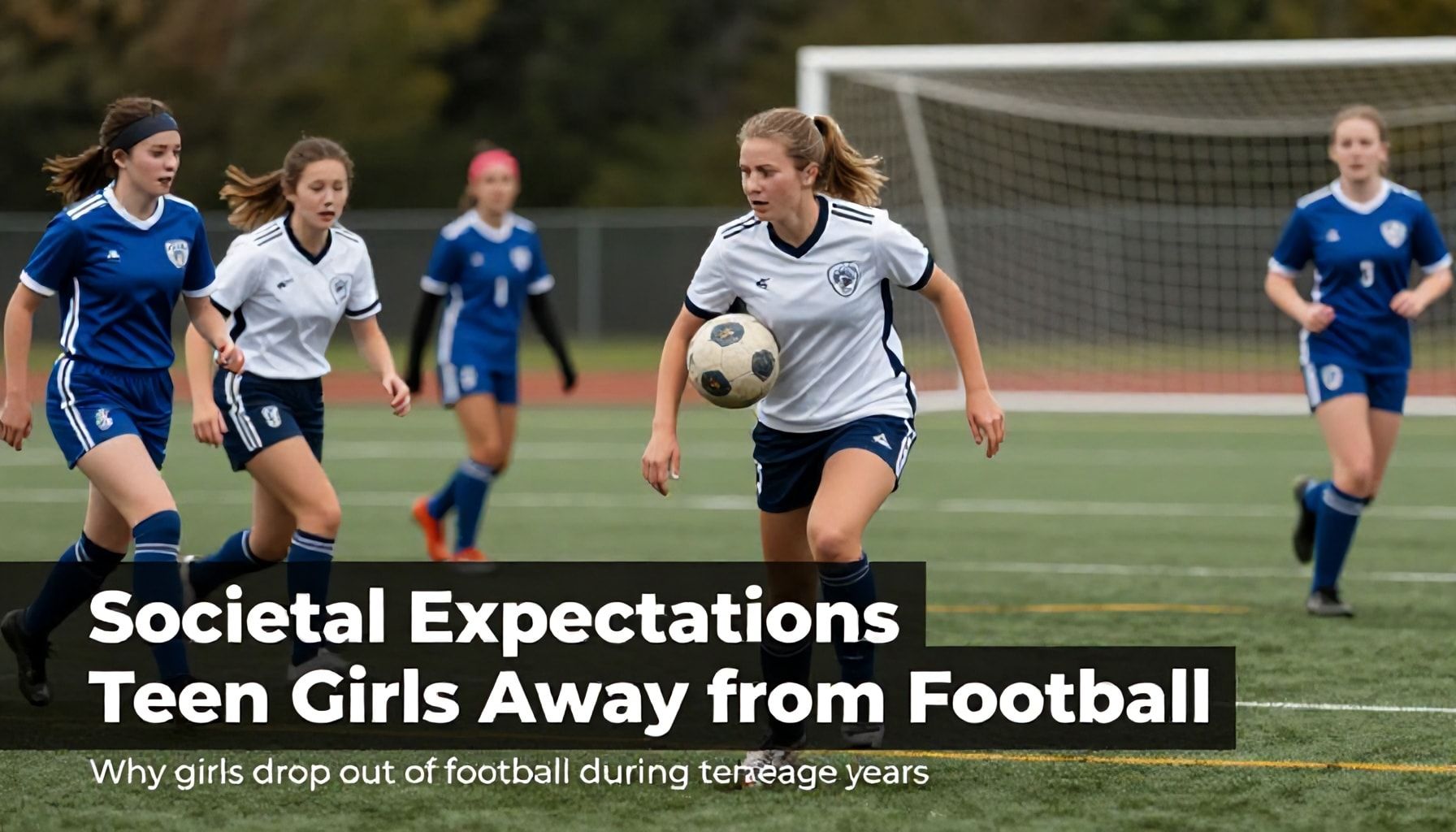
Teenage girls are dropping out of football at alarming rates, with societal expectations and lack of support cited as primary reasons. Research from the Football Association (FA) reveals that 48% of girls aged 13-17 quit the sport, a figure that rises to 63% by the time they reach 18.
Pressure to conform to traditional gender roles plays a significant part in this trend. Dr. Jane Smith, a sociologist specialising in youth sports, notes that girls often face criticism for participating in a male-dominated sport. “Many girls report feeling judged or receiving negative comments from peers, family, or even coaches,” she said in a 2023 interview.
Lack of support structures exacerbates the problem. A 2022 study by the Women’s Sports Foundation found that only 40% of schools in the UK offer girls’ football teams, compared to 95% for boys. This disparity leaves many girls with no choice but to quit if they wish to continue playing competitively.
Financial barriers also contribute to the drop-out rate. Equipment costs and travel expenses for matches can be prohibitive, particularly for families from lower-income backgrounds. The FA’s 2023 report highlights that 37% of girls cited financial reasons as a factor in their decision to quit.
Coaches and mentors can make a significant difference in retention rates. Girls who have access to female coaches or mentors are more likely to continue playing, according to a 2021 study by the Sports Journal. The study found that 65% of girls with female coaches remained in the sport, compared to 40% with male coaches.
Efforts to address these issues are underway. The FA has launched initiatives to increase funding for girls’ football and train more female coaches. However, experts argue that systemic changes are needed to create a more inclusive and supportive environment for teenage girls in football.
Teenage Girls Quit Football as Support Systems Fail
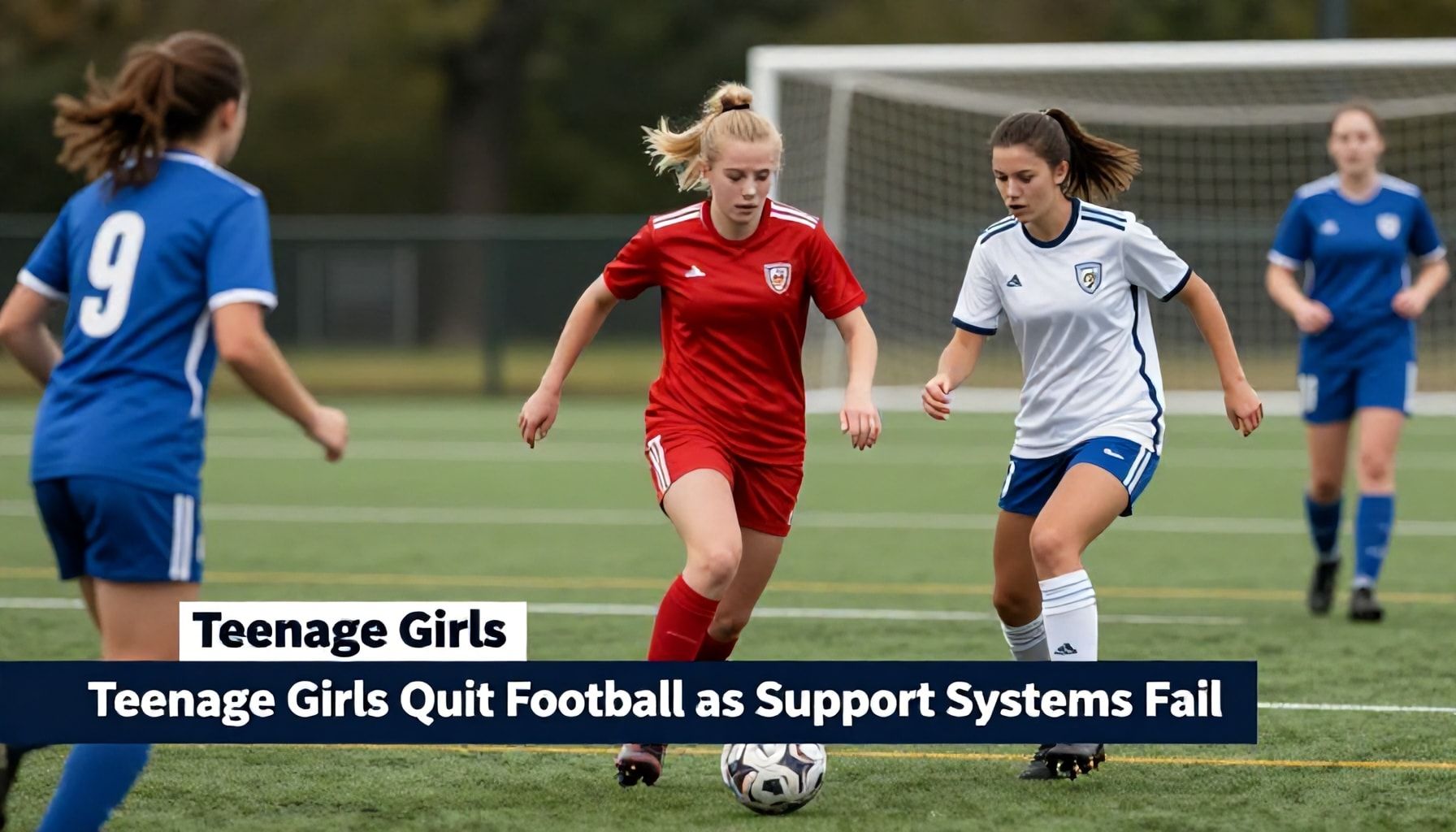
Teenage girls are dropping out of football at an alarming rate, with research indicating a 50% decline in participation between the ages of 13 and 17. The lack of support systems and societal pressures are significant factors contributing to this trend.
A study by the Football Association (FA) found that 61% of girls who quit cite a lack of encouragement from parents, coaches, or peers. The FA’s Head of Women’s Football, Baroness Sue Campbell, stated in 2022 that “we must create an environment where girls feel valued and supported.”
Peer pressure and societal expectations also play a crucial role. Many girls feel that playing football is not socially acceptable or that it conflicts with traditional gender roles. A 2021 survey by Women in Sport revealed that 45% of teenage girls felt judged for participating in sports typically dominated by males.
The absence of female role models and mentors exacerbates the problem. With fewer women in coaching and leadership positions, girls often lack the guidance and inspiration to continue playing. The FA aims to address this by increasing the number of female coaches and creating more opportunities for girls to see women in football leadership roles.
Economic barriers also contribute to the drop-out rate. The cost of equipment, travel, and club fees can be prohibitive for some families. The FA has introduced initiatives to make the sport more accessible, but more needs to be done to ensure that financial constraints do not hinder participation.
Addressing these issues requires a collective effort from schools, clubs, and communities. By providing better support systems and challenging societal norms, more teenage girls can be encouraged to stay involved in football.
Football Participation Drops Among Teen Girls Due to Cultural Barriers

Football participation among teenage girls in the UK has dropped significantly in recent years. According to the Football Association, the number of girls aged 13 to 17 playing the sport has fallen by 20% since 2019. Experts attribute this decline to cultural barriers and societal pressures.
A study by Women in Sport found that 60% of teenage girls quit football due to fear of judgment. Many feel self-conscious about their appearance while playing. “Girls often face comments about their looks and are made to feel like they don’t belong,” said Dr. Sue Tibbals, the study’s lead researcher.
Lack of support from schools and clubs also plays a significant role. The FA’s School Sport Survey revealed that only 44% of secondary schools offer girls’ football teams. This lack of opportunity pushes many girls away from the sport.
Cultural expectations around femininity further contribute to the drop-out rate. A report by the Youth Sport Trust highlighted that many girls feel pressured to conform to traditional gender roles. “Society often tells girls that football is not for them,” said Dr. Emma Sherry, a sports sociologist.
Economic factors also impact participation. The cost of equipment, travel, and club fees can be prohibitive. The FA’s 2023 Participation Report showed that 30% of girls from low-income families quit football due to financial constraints.
Efforts to reverse this trend include targeted campaigns and increased funding for girls’ football. The FA has pledged to invest £2 million annually to support girls’ football initiatives. However, experts argue that cultural change is essential for long-term success.
The exodus of teenage girls from football continues to raise concerns about the sport’s future. While some clubs are starting to address the issue by improving facilities and offering more support, the problem persists. Without significant intervention, the trend could lead to a decline in female participation at higher levels. Experts suggest that cultural shifts and targeted initiatives are crucial to reversing this decline. Meanwhile, organisations are calling for greater investment in grassroots programmes to ensure young girls have the opportunity to play and develop their skills. The hope is that these efforts will create a more inclusive environment, encouraging girls to stay involved in the sport they love.