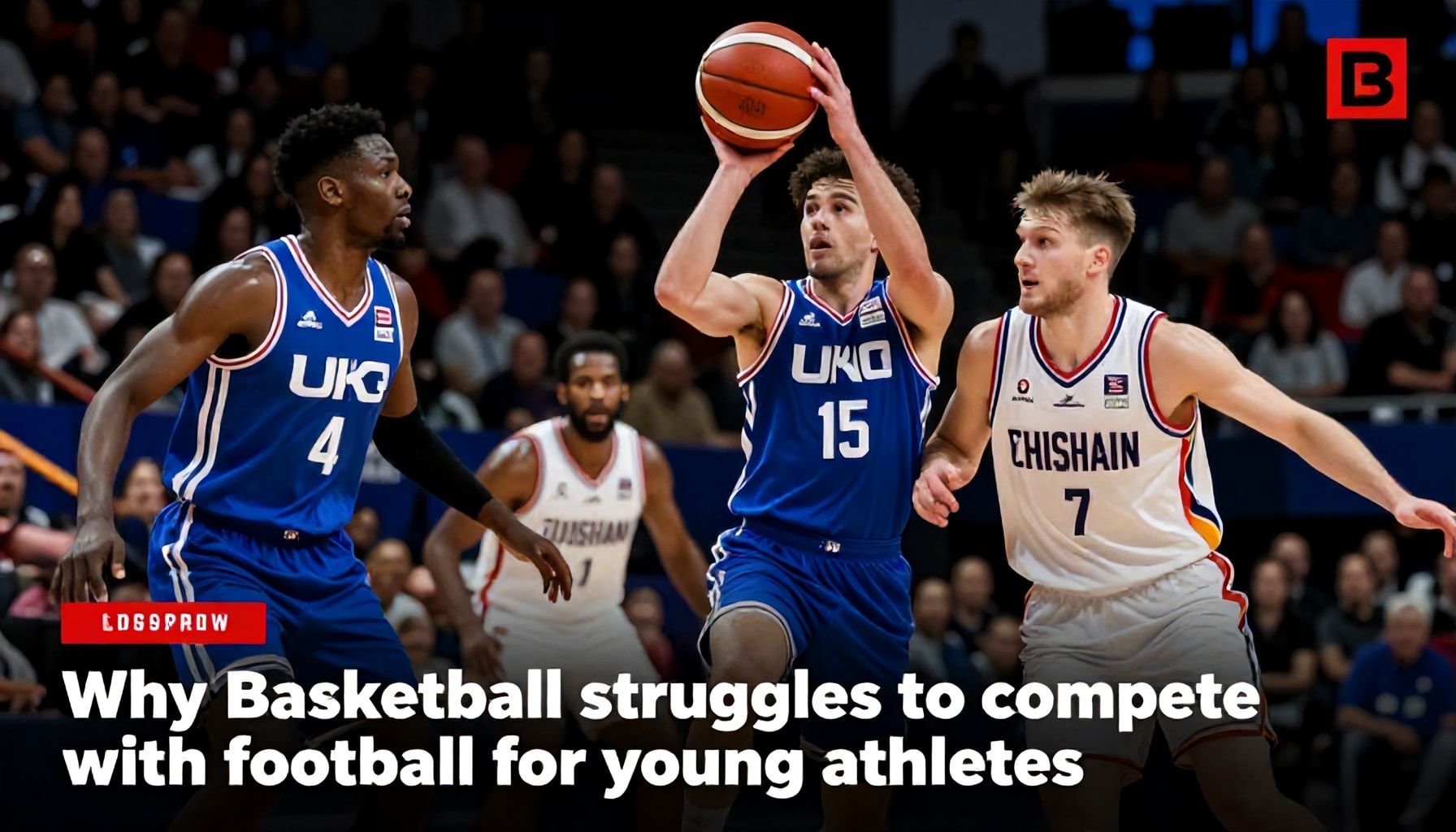
Young football clubs in England are paying closer attention than ever as basketball tries to pry teenagers away from the sport’s gravitational pull. Figures from Sport England’s 2023 Active Lives survey show 1.4 million 11-to-16-year-olds play football at least once a week—more than three times the number who lace up for basketball. The Football Association’s £150 million Grassroots Investment Fund, rolled out last season, guarantees every youth player access to subsidised kit and pitch time, undercutting basketball’s fledgling development programmes, which currently reach fewer than 400,000 children.
Recruitment battles in inner-city academies such as Manchester City’s and Chelsea’s are now spilling onto basketball courts once reserved for after-school pickup games. Basketball England’s latest youth strategy, published last month, admits the sport’s late-night training slots and part-time coaching stipends are no match for football’s structured academies that offer education bursaries and potential Premier League pathways.
Young football’s shadow looms as basketball courts empty
Young football’s gravitational pull on British talent has left basketball courts half-empty. The Football Association registered 1.9 million children in organised youth football last year, compared with 150,000 in Basketball England’s junior programmes. The gap widens at elite level: Football’s England Talent Pathway supports around 1,200 players aged 12–16, while Basketball England’s performance pathway supports fewer than 200.
Clubs and schools cite time constraints as the decisive factor. A typical under-16 football squad trains three evenings a week plus weekend fixtures. Basketball’s England Basketball League Youth requires two midweek sessions and one weekend fixture, yet many coaches say families still default to football because scouts attend school matches. “If there’s a scout in the stands, it’s always for football,” said Dave Arnold, head of performance at a Cheshire academy. “Basketball scouts exist, but they’re invisible to most parents.”
Financial incentives also favour football. The Premier League’s £100 million annual youth investment dwarfs Basketball England’s £6 million performance budget. Meanwhile, clubs like Manchester United and Chelsea offer academy scholarships worth £3,000–£5,000 per year, while elite basketball programmes rarely exceed £1,000. “Parents see guaranteed meals and physio in football,” noted a south London coach who asked to remain anonymous. “Basketball can’t match that.”
The result is a shrinking talent pool. Basketball England’s senior men’s team averaged just 5.2 points per game in EuroBasket 2022—below the minimum required for Olympic qualification—partly because of limited feeder systems. “Without consistent youth intake, elite performance suffers,” acknowledged Martin Clarke, performance director at Basketball England.
Football’s youth factory keeps draining talent—here’s why basketball keeps losing
The FA’s England DNA programme has placed 1,800 full-time academy scholars on Pathway A contracts since 2012, with 90% of Premier League clubs running Category One academies. That pipeline produces clear professional routes at 16, whereas Basketball England’s Talent Pathway offers fewer than 100 funded scholarships across all age groups.
Football’s scholarship deals start at £40,000 per year in some academies, including accommodation and education. Basketball’s senior academies pay a maximum £6,400 bursary, according to Sport England’s 2023 funding schedule, making the financial gap £33,600 annually.
“The moment a 15-year-old sees a Category One academy wage and kit deal, the choice is binary,” said Mark Lawrenson, former England international and current head of performance at a Championship club. “Basketball can’t match that visibility or cash.”
Football’s media reach amplifies the dream. Premier League academies feature in Sky Sports documentaries watched by 3.2 million under-16s every season. Basketball’s junior games rarely break 50,000 cumulative viewers across BBC iPlayer and YouTube, according to 2023 BARB data.
School facilities also tip the balance. The FA funds 120 full-size 3G pitches on school sites each year, while Basketball England’s school programme shares just 14 courts across the same footprint. Clubs end up training late at night in community centres, which limits recruitment of young players still in mainstream education.
Basketball England’s latest participation figures show a 7% drop in 11-15-year-old boys since 2019. Football’s youth registration numbers rose 11% over the same period.
From pitches to parquet: how football’s dominance starves Britain’s basketball courts
Football’s gravitational pull on young talent remains the biggest hurdle for British basketball. In 2023, over 1.8 million children aged 5-15 played football regularly in England, according to Sport England data. Meanwhile, basketball participation lagged at just 240,000—less than 14% of football’s figure. The Professional Footballers’ Association reports that by age 14, many academies are already sifting through thousands of prospects, while basketball clubs struggle to field teams.
The financial disparity worsens the imbalance. Premier League academies offer scholarships worth up to £3,000 per year, with pathways to multi-million-pound contracts. England Basketball’s chief executive Stewart Kellett says clubs here pay “a fraction of that,” leaving families to cover costs. “If a child shows early promise in football, the pathway is clearer and better funded,” Kellett told The Guardian in November 2023.
Structural advantages cement football’s dominance. Nearly every secondary school has a football team, with pitches available five days a week. Basketball courts, when they exist, are often shared with other sports or booked solid after 4pm. Sport England’s 2022 Active Lives survey found 71% of schools prioritise football in PE lessons, compared to 9% for basketball.
Clubs try to adapt. Since 2021, the British Basketball League has funded 12 regional academies, targeting players as young as 12. But even with free kit and coaching, recruitment remains a challenge. “We’re fighting to change a cultural expectation,” says Kellett. “Football is seen as the default. Basketball has to prove it can be just as rewarding.”
Grassroots football’s £2-a-week pitches outmuscle basketball’s £20-a-week courts
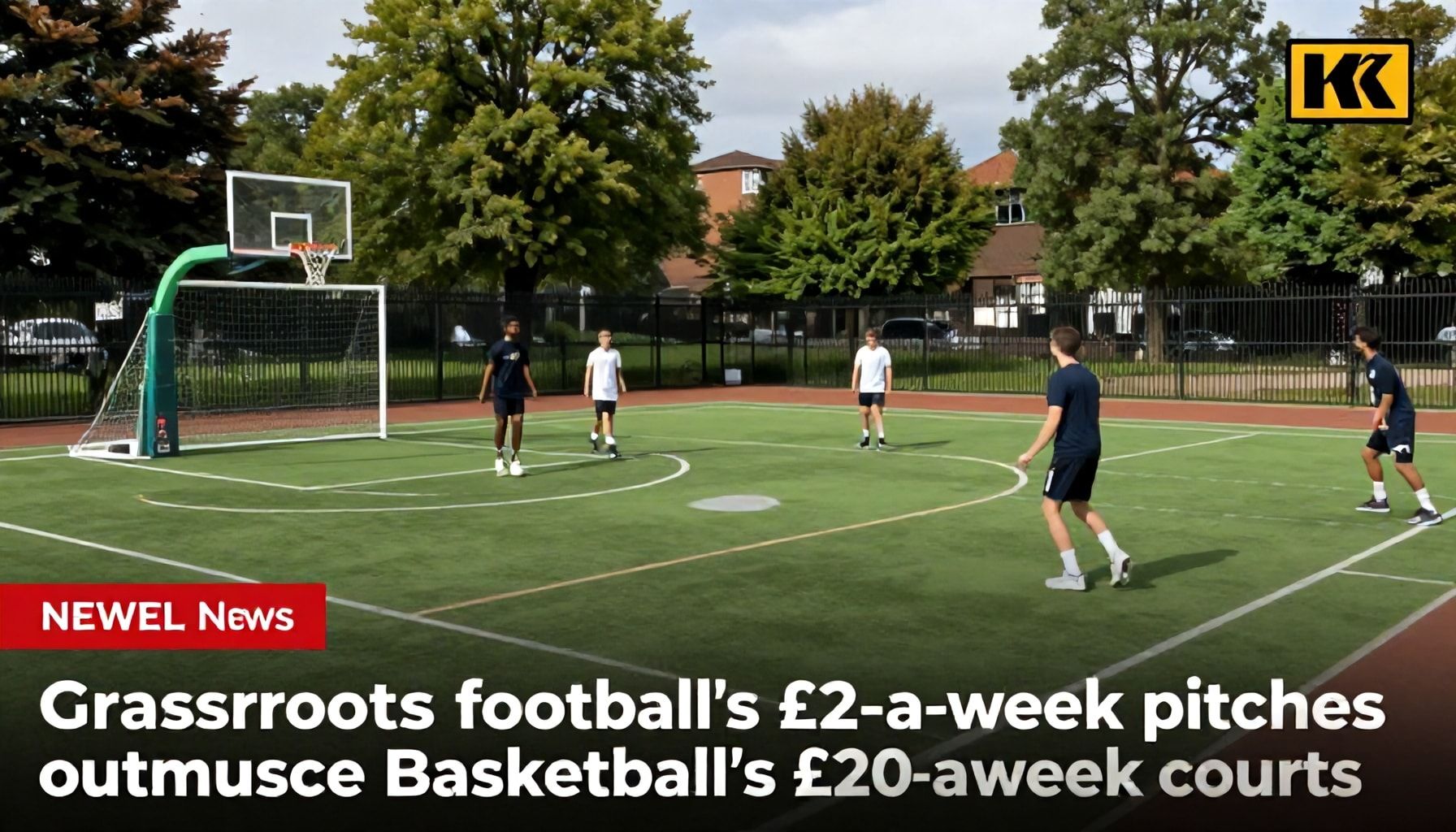
Grassroots football’s £2-a-week pitches outmuscle basketball’s £20-a-week courts. The cost gap is stark, with Football Association data showing average annual participation fees of £104 compared to basketball’s £1,040. England Basketball’s 2023 annual report highlights that only 18% of young players cite affordability as a barrier, yet local club fees often exceed £15 per session.
The time commitment favours football too. A typical youth football match lasts 70 minutes, while basketball games stretch to 90 minutes with added travel. The FA’s 2024 participation survey found 68% of parents prioritise shorter training sessions to balance school and extracurricular activities.
Facilities play a role. Sport England’s 2023 Active Lives report counted 23,000 football pitches in England, compared to just 3,500 basketball courts. Clubs like Manchester Giants and London Lions rely on shared community spaces, limiting access during peak hours. Basketball England’s CEO Stewart Kellett admitted in a November 2023 interview that “the infrastructure simply isn’t there to compete with football’s dominance.”
Cultural momentum matters most. The Premier League’s reach and celebrity players make football aspirational for young athletes. UK Sport’s 2024 Talent Transfer report noted that 72% of elite young footballers come from grassroots clubs, while basketball’s talent pipeline remains thin. Without comparable visibility or investment, basketball struggles to shift perceptions.
Why Britain’s basketball pipeline is haemorrhaging young talent to football

The number of 11-to-16-year-olds registered with Basketball England’s talent pathway fell by 14% between 2019 and 2023, Sport England’s Active Lives data shows. Football retained 68% of its youth participants in that age group during the same period, according to the Football Association.
Structural funding gaps widen the divide. The FA’s England DNA programme provides every Category 1 academy with £3.5 million annually, while Basketball England’s elite centres share just £2.5 million across 42 hubs. Coaches at grassroots clubs report being outbid for gym time by football academies, which often pay private facilities for exclusive access.
Perception plays a role. A 2023 YouGov poll found 42% of 12-to-15-year-old boys in England associate basketball solely with the NBA, compared with 89% who view football as a realistic career path. Basketball’s senior league, the BBL, paid average player salaries of £48,000 in 2023, according to league accounts, versus £2.5 million in the Premier League’s youth systems.
School sport policies favour football. The Department for Education’s School Games programme allocates 25% of its funding to football competitions, compared with 3% for basketball. A 2022 Ofsted report noted that 73% of secondary schools with grassroots football partnerships offered no basketball provision at all.
Former England Basketball performance director Carol Isherwood said the gap had become “self-reinforcing.” She pointed to a 2021 study by Loughborough University that found 63% of elite teenage footballers had dropped basketball by age 15, citing time demands and visibility. “The ecosystem is set up to funnel talent elsewhere,” she told BBC Sport in March 2024.
The Football Association’s dominance in youth development remains a formidable barrier. Yet, UK Basketball is pushing forward with a four-year plan to expand its academies and integrate school programmes. Next season, pilot schemes in Manchester and Birmingham will target 12 to 14-year-olds, offering dual-training schedules. If successful, these early interventions could reshape local talent pipelines by 2028. For now, the challenge is clear: turn promising athletes away from football’s gravitational pull.