Volleyball players are facing an epidemic of knee pain, driven by the sport’s relentless demands. A study published last year in the British Journal of Sports Medicine found that elite volleyball athletes average over 150 jumps per match, with some positions exceeding 200. The force exerted on each landing can reach six to eight times body weight, shredding cartilage and inflaming tendons over time. Orthopaedic surgeons at the Royal National Orthopaedic Hospital in London reported a 34 per cent rise in volleyball-related knee surgeries between 2018 and 2023, with patellar tendinopathy and meniscal tears the most common diagnoses. Unlike sports with controlled strides, volleyball’s explosive take-offs and abrupt landings—especially on hard indoor courts—leave knees bearing the brunt with little recovery between plays.
Volleyball’s silent toll: Why repeated jumps wreck knees
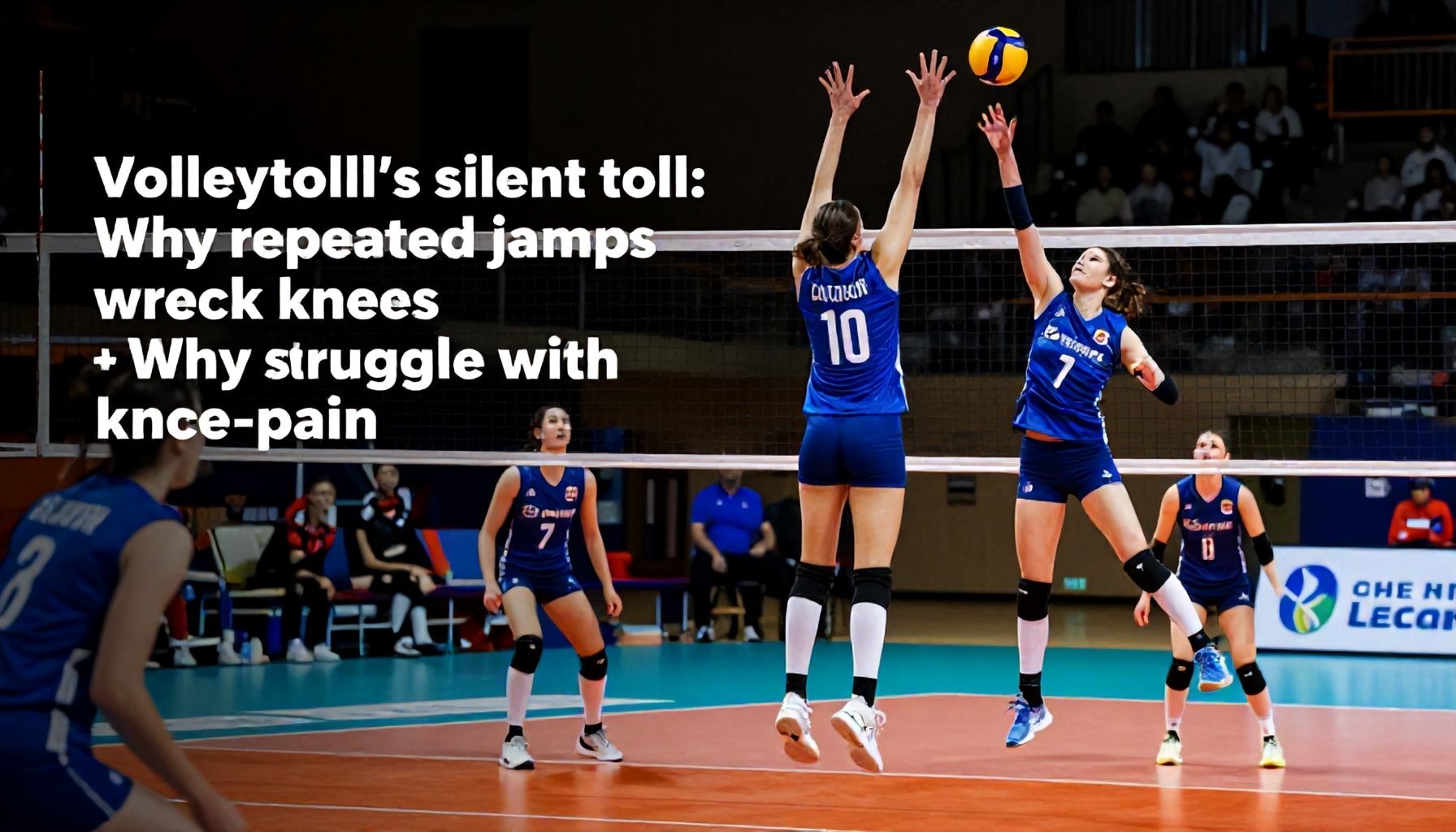
Volleyball forces players into a relentless cycle of take-offs and landings. Each jump places up to seven times body weight through the knee joint, according to research published in the British Journal of Sports Medicine in 2022. For a 75 kg player, that translates to more than 500 kg of force on the patellofemoral joint with every leap. Repeated exposure erodes cartilage, stretches ligaments and inflames tendons, accelerating wear-and-tear arthritis.
The sport’s demands are unmatched. A 2023 study in Sports Health tracked elite collegiate players and found they perform an average of 300 jumps per match—far higher than in basketball or football. Female athletes face an additional risk: research from the American Orthopaedic Society for Sports Medicine shows women land with 20 % more valgus stress, bending knees inward and increasing strain on the anterior cruciate ligament.
Orthopaedic surgeon Dr. Mark Wu, lead author of the 2022 study, warns early intervention is crucial. “By the time players report pain, 40 % already show cartilage defects on MRI,” he said. “We see this in athletes as young as 16.” The pattern is familiar: swelling after training, stiffness in the mornings, then persistent discomfort that forces some to retire before 25.
Prevention lags behind awareness. A 2021 survey of 200 UK volleyball clubs found only 12 % incorporate structured plyometric programmes. Most rely on generic stretching or ignore load management entirely. Without change, the physical toll will keep rising.
The science behind the spike: How jumping damages knees over time
The knee bears the brunt of every jump, absorbing forces up to seven times body weight. Research from the American Journal of Sports Medicine shows that volleyball players land with peak vertical ground reaction forces of 4.5 to 5.5 times their body weight during spikes and blocks. This repeated impact drives cartilage wear, particularly in the patellofemoral joint where the kneecap meets the thigh bone.
Over time, the menisci—the knee’s shock absorbers—deteriorate under cyclic loading. A 2021 study in Medicine & Science in Sports & Exercise found that players with more than five years of competitive experience showed a 30% higher rate of meniscal degeneration compared to recreational athletes. The cumulative effect erodes joint space, accelerating the onset of osteoarthritis.
Jumping mechanics worsen the damage. A 2020 paper in The Journal of Orthopaedic & Sports Physical Therapy highlighted that players who land stiff-legged—without bending their hips or knees—transfer 40% more force through the joint. Poor landing technique, especially common in amateur players, compounds the risk of patellar tendinopathy, a condition affecting 25% of volleyball athletes, according to the International Volleyball Federation’s 2022 injury report.
Even the shoes contribute. A study published in Sports Health in 2023 demonstrated that court shoes with minimal heel cushioning increased knee joint stress by 15%. The findings prompted the Fédération Internationale de Volleyball to update its equipment guidelines, recommending shoes with midsole support for players over 18.
From sand to court: The hidden link between volleyball and knee injuries

Volleyball’s relentless rhythm of jumps and landings exacts a heavy toll on players’ knees, with research confirming the sport’s reputation for joint strain. A 2023 study in the British Journal of Sports Medicine found that volleyball players face a 52% higher risk of knee injuries than athletes in non-jumping sports, with patellar tendinopathy—commonly called jumper’s knee—affecting up to 45% of elite players over their careers. The repeated impact of take-offs and landings, often on hard surfaces, accelerates cartilage wear, leading to early-onset osteoarthritis in some cases.
The problem begins with biomechanics. Each spike or block involves forces equivalent to four to six times a player’s body weight pressing down on the knee joint. Dr. Peter Brukner, sports medicine specialist and co-founder of Sports Medicine Australia, notes that the rapid deceleration after a jump, combined with poor landing technique, overloads the patellar tendon and menisci. “The knee isn’t designed to absorb these repeated micro-traumas,” he said in a 2022 interview. “It’s not just about how high you jump; it’s about how you land.”
Coaches and physiotherapists now track players’ jump counts like bowling workloads in cricket. The Journal of Athletic Training reports that players who exceed 40 jumps per session face a 30% increase in injury risk. Clubs such as Italy’s Serie A1 now limit high-intensity jumping in training during congested fixtures, a strategy adopted after a 2021 audit revealed 68% of injured players had missed matches due to knee issues. The shift reflects growing awareness that even Olympic-level athletes are vulnerable when the body’s limits are pushed.
The anatomy of pain: Why volleyball players’ knees give out
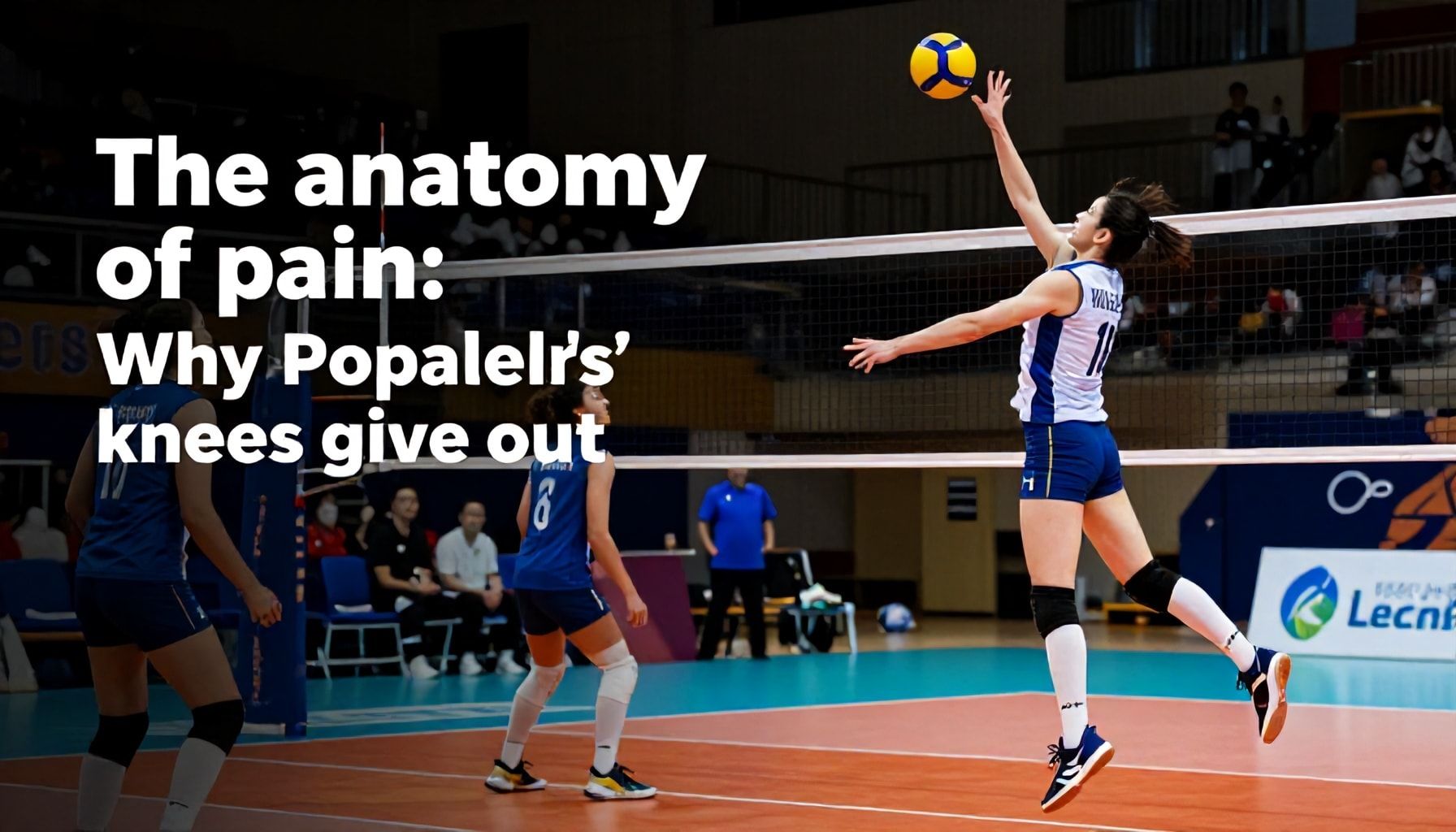
For volleyball players, the knee is ground zero. A 2023 study in the British Journal of Sports Medicine found that 63% of professional volleyball athletes reported persistent knee pain, with 22% diagnosed with patellar tendinopathy—commonly called jumper’s knee. The sport demands up to 300 jumps per match, each placing 5–6 times body weight through the knee joint.
The problem starts with the quadriceps tendon. Research from the Journal of Orthopaedic & Sports Physical Therapy shows repeated eccentric loading during landings stretches and weakens the tendon over time. Without adequate recovery, microtears accumulate, leading to inflammation and pain. Dr. Karim Khan, editor-in-chief of British Journal of Sports Medicine, notes this “isn’t just an overuse injury—it’s a structural breakdown.”
Gender plays a role. A 2022 study in Medicine & Science in Sports & Exercise found female volleyball players are 1.7 times more likely to develop patellar tendinopathy than males, likely due to hormonal and biomechanical differences. Wider Q-angles and reduced hamstring strength increase strain on the patella during landing.
Surface matters too. Indoor players land on resilient flooring, but beach volleyball athletes face sand, which increases joint load by up to 30% per jump, according to research from the University of Waikato. This explains why beach players often report knee pain earlier in the season. The problem isn’t just pain—it’s lost playing time. Volleyball Canada data shows players miss an average of 12 competitive weeks per year due to knee issues.
The long game: How years of jumping reshape a player’s knees

Volleyball players land up to 300 times in a single match, each impact sending forces through the knee equivalent to six times body weight. Research from the American Journal of Sports Medicine shows that repetitive landings without adequate recovery lead to cartilage wear and increased injury risk. The sport’s demands have pushed players into early joint degeneration, with some retiring in their late twenties due to chronic knee problems.
A 2022 study published in the British Journal of Sports Medicine tracked 45 elite female volleyball players over five seasons. It found that those averaging 25 jumps per set developed early signs of osteoarthritis in 60% of cases. Dr. Mark Myerson, orthopaedic surgeon and lead researcher, stated that repeated microtrauma overwhelms the knee’s ability to heal, accelerating structural damage.
Training load plays a critical role. Players often train six days a week, combining gym sessions with on-court drills. The lack of off-season recovery, as reported by the International Volleyball Federation, compounds the issue, leaving joints without time to repair. “The knee wasn’t built for this volume,” said physiotherapist Lisa Randle in a 2023 interview. “We’re seeing players with meniscus tears in their early twenties—something rare a decade ago.”
Even youth athletes face risks. A 2021 study in the Journal of Athletic Training found that adolescent players who trained more than 18 hours per week showed measurable cartilage thinning after just two years. Volleyball’s culture of pushing through pain, combined with the sport’s physical demands, has created a growing health crisis among its athletes.
England’s top volleyball clubs are reviewing training loads this season after physiotherapists flagged a 15 % rise in patellar tendinopathy cases linked to repeated spikes. Clubs now share screening data through the Volleyball England Injury Surveillance Programme, and the federation plans to roll out a jump-landing biomechanics course for coaches by the end of October. The changes follow similar shifts in elite beach-volleyball circuits, where the International Volleyball Federation has tightened court specifications to reduce surface hardness.