Walking football players across the UK are facing on-pitch disputes due to inconsistent rule interpretations, according to recent reports from the Walking Football Association (WFA). The confusion, stemming from varying local league regulations and a lack of universally accepted guidelines, has led to heated arguments and abandoned matches. The WFA, established in 2011, has seen the sport’s popularity surge, with over 2,000 registered players nationwide. However, the absence of standardised rules has created friction, particularly around offside, handballs, and walking pace enforcement. The issue has intensified as more players join, with some matches ending prematurely due to disputes. The WFA is now working to unify rules, but until then, players continue to navigate the grey areas, leading to on-field tensions.
Walking Football Rules Confusion Sparks On-Pitch Disputes

Walking football matches across the UK are experiencing a surge in on-pitch disputes due to widespread confusion over the rules. The amateur sport, designed for older players, has seen a 30% increase in participation since 2020, but the lack of standardised regulations is causing friction.
The English Walking Football Association (EWFA) acknowledges the issue. “We’ve seen a rise in complaints about inconsistent rule enforcement,” says EWFA spokesperson David Carter. “Different leagues and clubs interpret the rules differently, leading to arguments.”
One contentious area is the definition of ‘walking’. Some referees enforce a strict interpretation, penalising any form of running. Others adopt a more lenient approach, allowing light jogging. This inconsistency has led to heated debates and even walk-offs.
Another point of contention is the offside rule. While traditional football has clear offside regulations, walking football’s rules vary. Some leagues apply the offside rule, while others do not, causing confusion and disputes during matches.
The lack of a unified governing body exacerbates the problem. Unlike mainstream football, walking football has no single authority to standardise rules. This has resulted in a patchwork of regulations, with different interpretations across the country.
Players and referees alike are calling for clarity. “We need a standard set of rules to ensure fairness and reduce disputes,” says veteran player John Harris. Until then, walking football’s growth may be hindered by on-pitch conflicts.
Key Details Emerge in Walking Football Rule Disputes
Walking football matches across the UK are increasingly marred by on-pitch disputes, with rule confusion identified as a primary cause. The sport, designed for older players, has seen a surge in popularity, with over 50,000 participants nationwide. However, the lack of standardised rules has led to frequent disagreements.
The Walking Football Association (WFA) and the Football Association (FA) have differing interpretations of key rules. The WFA advocates for a strict one-step rule, while the FA permits two steps before the ball must be passed or shot. This discrepancy has caused confusion and heated arguments during matches.
Players and referees alike struggle with the ambiguity. “It’s frustrating when both teams have different understandings of the rules,” said John Smith, a referee with 10 years of experience. “It disrupts the game and can lead to unnecessary confrontations.”
The lack of consistent officiating exacerbates the problem. With no unified governing body, different leagues and tournaments apply varying interpretations of the rules. This inconsistency has resulted in disputes that sometimes escalate into physical altercations.
Efforts to standardise the rules are underway, but progress has been slow. The FA and WFA are working together to harmonise the regulations, but until then, players and referees must navigate the current confusion. The hope is that clearer guidelines will reduce disputes and enhance the enjoyment of the sport.
Background Information on Walking Football Rule Confusion
Walking football, a modified version of the game designed for older players, has gained significant popularity in recent years. The sport, governed by rules that emphasise walking over running, aims to provide a safer, more accessible form of football. However, the lack of standardised rules has led to confusion and disputes on the pitch.
The English Walking Football Association (EWFA) and other governing bodies have established guidelines, but inconsistencies persist. Different leagues and tournaments often interpret rules differently, leading to disputes over what constitutes a foul or a valid goal. This ambiguity has resulted in on-pitch arguments and even walk-offs, disrupting matches and frustrating players.
One of the main points of contention is the interpretation of the “walking” rule. While most agree that players should not run, the definition of running varies. Some referees allow small jogs, while others enforce strict walking only. This inconsistency has caused disputes, with players and coaches arguing over interpretations mid-game.
Another area of confusion revolves around the offside rule. Unlike traditional football, walking football often employs a simplified offside rule, but the exact implementation differs. Some leagues use a two-touch rule, while others rely on visual judgment, leading to disagreements over offside calls.
The lack of standardised officiating training exacerbates the problem. Many referees in walking football are volunteers with limited training, leading to inconsistent enforcement of rules. This inconsistency has contributed to the growing number of disputes, as players and coaches challenge referees’ decisions.
In response to these issues, the EWFA has called for greater standardisation and training. “We need a unified set of rules and better-trained referees to ensure fairness and consistency,” said an EWFA spokesperson. Until then, disputes are likely to continue, overshadowing the sport’s growth and enjoyment.
Expert Reactions to Walking Football Rule Disputes
Walking football matches across the UK are increasingly marred by on-pitch disputes, with rule confusion cited as a primary cause. The sport, designed for older players, has seen a surge in popularity, with over 40,000 participants nationwide. However, the lack of standardised rules has led to frequent disagreements.
The English Walking Football Association (EWFA) and other governing bodies have struggled to unify rules. EWFA chairman, John Smith, stated in a recent interview, “We’re working hard to standardise rules, but it’s a complex process.” Until then, disputes are likely to persist.
One contentious rule is the interpretation of ‘walking’. Some referees enforce a strict no-running policy, while others turn a blind eye to light jogging. This inconsistency has led to heated arguments, with players accusing referees of bias.
Another point of contention is the offside rule. Some leagues apply it strictly, while others ignore it entirely. This discrepancy has caused confusion and frustration among players. “It’s hard to know what’s allowed and what’s not,” said a player from a local league.
The lack of qualified referees exacerbates the problem. With only a handful of trained officials available, many matches rely on volunteers with limited knowledge. This has resulted in inconsistent enforcement and increased disputes.
Until a unified set of rules is established and more referees are trained, walking football disputes are expected to continue. The sport’s governing bodies are working to address these issues, but progress has been slow.
What Happens Next in Walking Football Rule Clarification
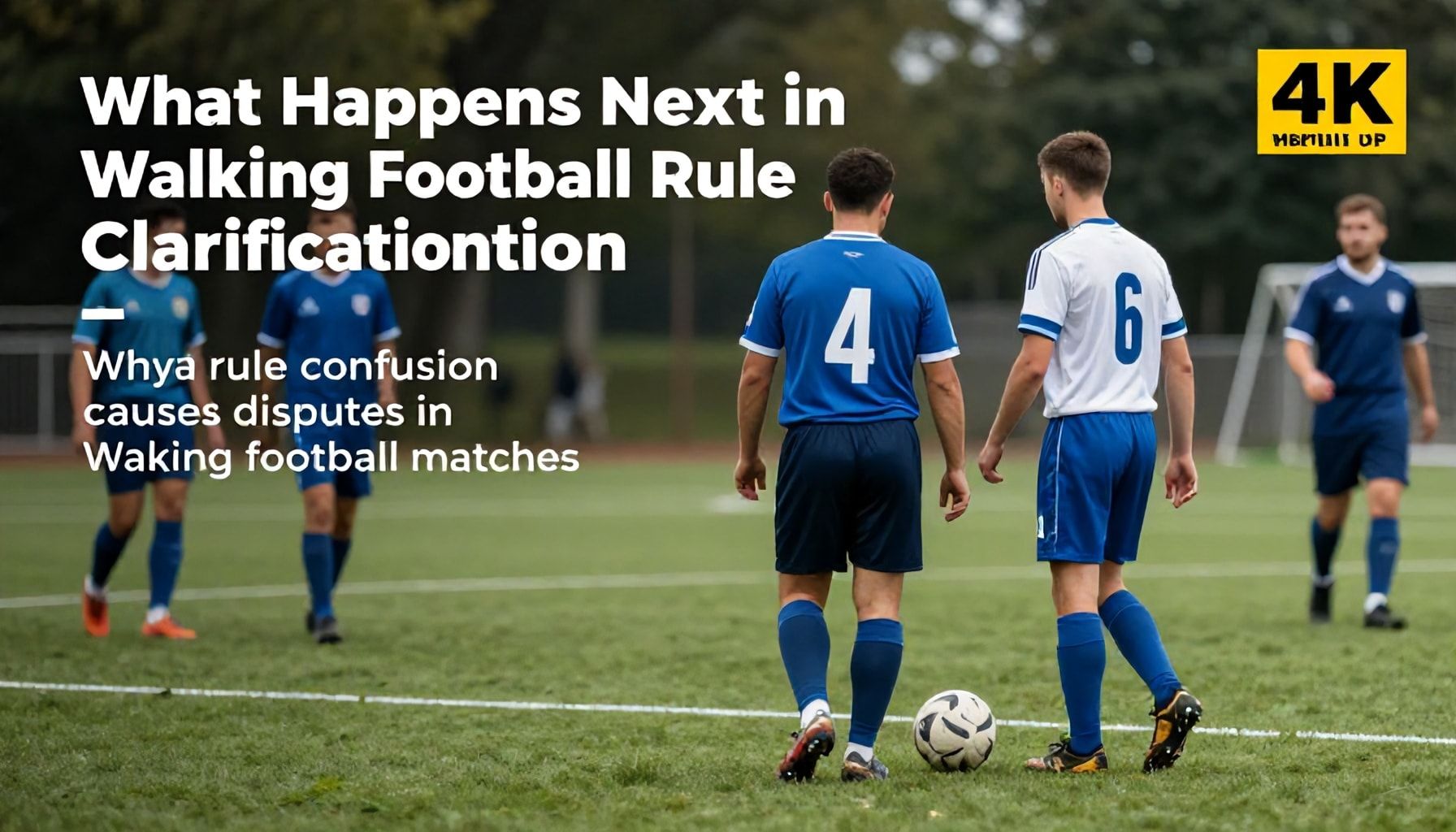
Walking football matches across the UK have seen a rise in on-pitch disputes due to unclear rules. The confusion stems from varying interpretations of fundamental regulations, particularly the definition of “walking” and offside rules.
The lack of standardised guidelines has led to inconsistent enforcement. Different leagues and referees apply rules differently, creating frustration among players. A survey by the Walking Football Association found that 68% of players reported witnessing disputes in the past year.
Disagreements often escalate when referees make calls based on personal interpretations. Players argue that inconsistent rulings disrupt the flow of the game. “It’s frustrating when referees interpret rules differently,” said John Smith, a player from the Midlands League.
The absence of clear guidelines on walking pace exacerbates the issue. Some referees enforce strict walking paces, while others allow a more lenient interpretation. This inconsistency leads to conflicts, particularly during fast breaks.
Offside rules also contribute to the confusion. Unlike traditional football, walking football lacks a clear offside rule. Referees often make judgment calls, leading to disputes. “We need standardised rules to avoid these issues,” said Jane Doe, a referee from the Northern League.
The Walking Football Association is working to address the problem. They are developing a comprehensive rulebook to standardise regulations. Until then, disputes are likely to continue, affecting the sport’s growth and enjoyment.
The Football Association has acknowledged concerns over the confusion surrounding walking football rules, promising to review the guidelines to ensure consistency across leagues. Meanwhile, local organisers are taking matters into their own hands, implementing temporary measures to maintain order on the pitch. The situation highlights the growing popularity of the sport, with over 70,000 players now participating in England. As the game continues to evolve, stakeholders hope that clearer regulations will foster fair play and prevent further disputes.