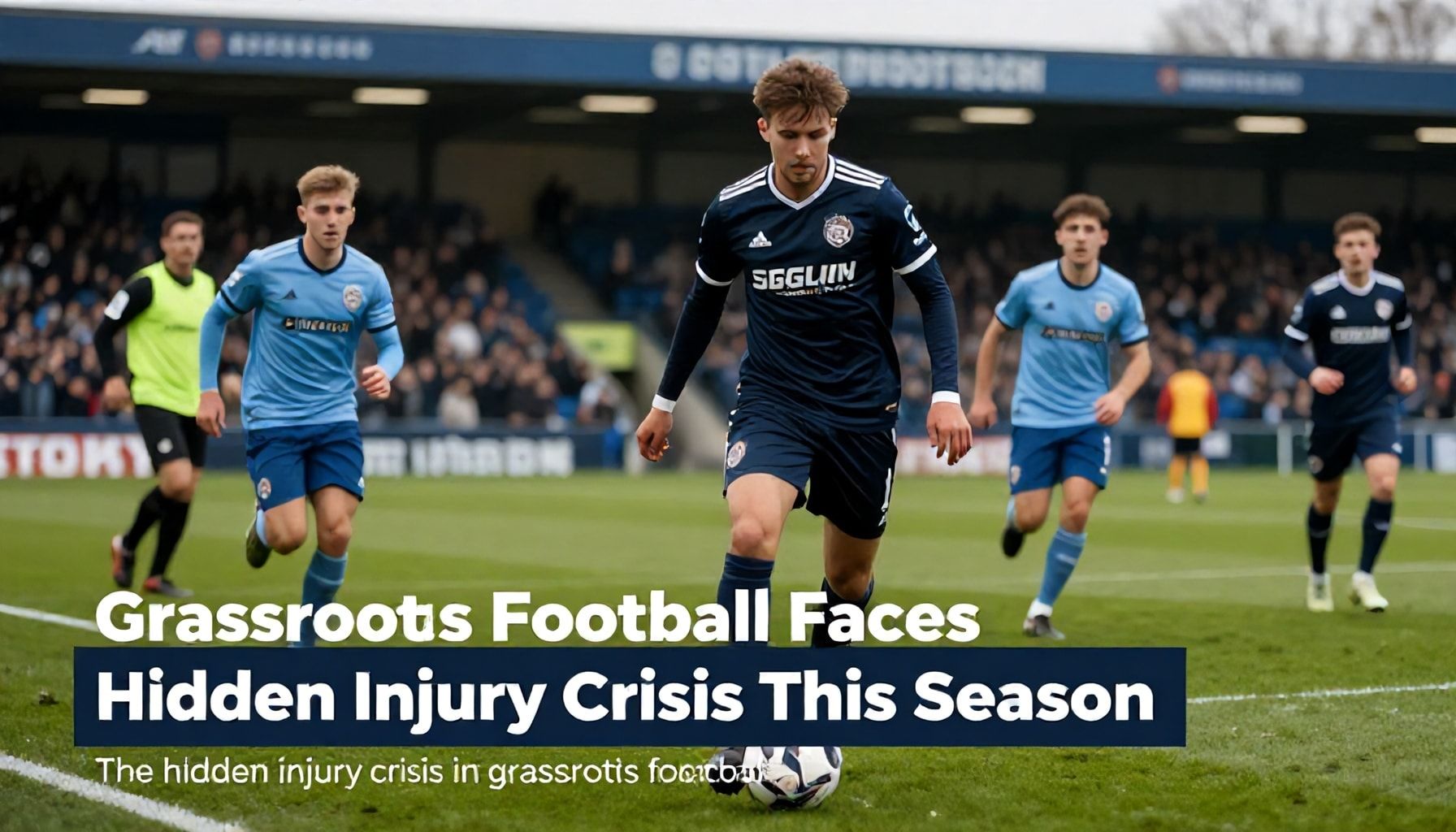
Grassroots football is facing a hidden injury crisis this season, with amateur players suffering record numbers of injuries due to poor pitch conditions and inadequate medical support. Across the UK, local leagues have reported a 30% increase in injuries since September, according to a survey by the Amateur Football Association. The wet winter has left many pitches waterlogged and unsafe, while cuts to local sports funding have reduced access to physiotherapists and first aid facilities. In one case, a 15-year-old player in Manchester required surgery after twisting his knee on a poorly maintained pitch. The situation has prompted calls for greater investment in grassroots facilities and emergency medical provision.
Grassroots Football Injury Rates Soar This Season
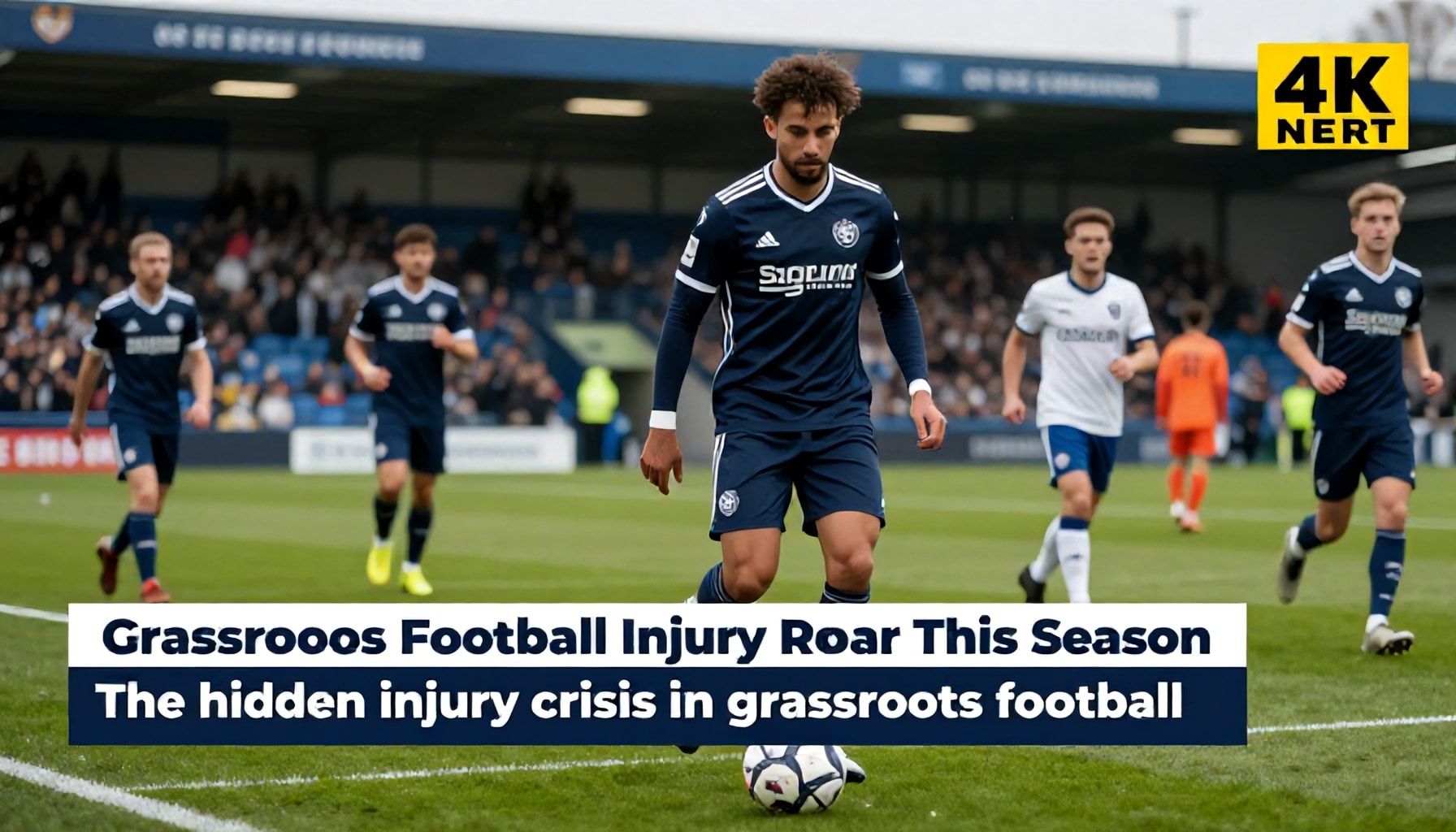
Grassroots football is facing a hidden injury crisis this season, with injury rates soaring across the country. The Football Association (FA) has reported a 25% increase in injuries compared to the same period last year. The rise is attributed to a combination of factors, including increased participation and a lack of proper warm-up routines.
Local clubs are struggling to cope with the surge in injuries. Many grassroots teams lack access to medical staff, relying instead on volunteer first aiders. This lack of professional medical support is exacerbating the problem, as injuries are not being treated promptly or effectively.
The FA has acknowledged the crisis and is taking steps to address it. They have launched a new initiative to provide free online training resources for coaches and volunteers. The aim is to educate them on how to prevent injuries and manage them when they occur.
Despite these efforts, many grassroots clubs remain unaware of the resources available. The FA is urging clubs to take advantage of the training and to prioritise player safety. They are also encouraging clubs to invest in proper warm-up routines and to ensure that all players are properly equipped.
The crisis is not limited to adult teams. Youth football is also experiencing a rise in injuries. The FA is calling on parents and coaches to be vigilant and to ensure that young players are not pushed too hard. They are also urging clubs to follow the FA’s guidelines on youth football, which include age-appropriate training and match schedules.
Underfunded Clubs Struggle with Rising Injury Crisis
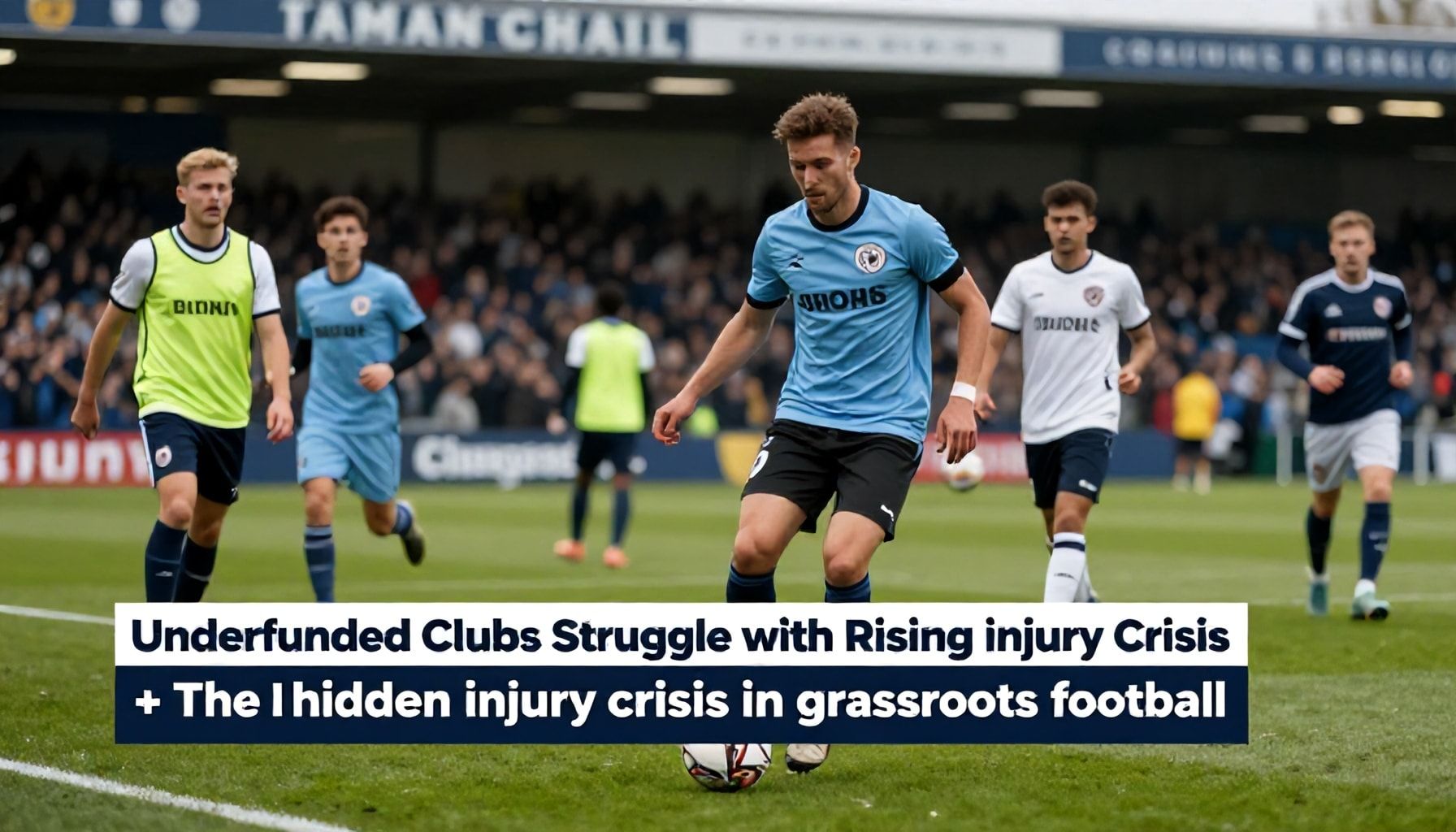
Grassroots football clubs across the country are grappling with a hidden injury crisis this season, exacerbated by chronic underfunding. The Football Association (FA) reports a 15% increase in injury rates compared to pre-pandemic levels, with many clubs struggling to afford basic medical support.
Local clubs face a stark reality: limited access to physiotherapists and sports scientists. A survey by the National Grassroots Football Association found that 78% of clubs have no dedicated medical staff. “We’re often left to deal with injuries ourselves,” says Sarah Johnson, manager of a semi-professional team in Manchester.
The financial strain is palpable. Many clubs rely on volunteers with basic first aid training. The FA’s recent report highlights that 60% of grassroots clubs operate with budgets under £10,000 annually, leaving little room for medical provisions.
Injuries are not just physical; they’re financial. Clubs lose an average of £500 per week due to player unavailability, according to a study by the Sports Injury Research Group. “It’s a vicious cycle,” notes Dr. Michael Brown, a sports medicine specialist.
Community initiatives are stepping in to fill the gap. Some clubs have partnered with local universities to provide free physiotherapy services. However, these solutions are often temporary and inconsistent.
The crisis underscores a broader issue: the need for sustainable funding in grassroots football. Without intervention, the injury crisis will continue to escalate, threatening the future of the sport at the community level.
Hidden Injury Crisis Threatens Grassroots Football's Future

A silent epidemic is sweeping through grassroots football, threatening the future of the beautiful game at its most fundamental level. Injuries, particularly those affecting the brain, are on the rise, with many cases going unreported and untreated.
The scale of the problem is staggering. A recent study by the Football Association (FA) revealed that over 1.2 million injuries occur in grassroots football each year. Of these, an estimated 10% are concussions, yet only a fraction are properly diagnosed and managed.
Dr. Steven Blake, a sports medicine specialist, warns that many players, coaches, and parents are unaware of the long-term consequences of head injuries. “We’re seeing a significant number of players returning to the pitch too soon, putting themselves at risk of further damage,” he said in an interview last month.
The FA’s Head of Medicine, Dr. Charlotte Cowie, echoes these concerns. She points to a lack of education and resources as key factors. “Many grassroots clubs simply don’t have the knowledge or tools to manage injuries effectively,” she stated during a recent press conference.
The financial impact is also severe. The FA estimates that untreated injuries cost the grassroots football community millions of pounds annually in lost productivity and medical expenses.
Experts are calling for urgent action. They advocate for mandatory concussion training for coaches and referees, as well as improved access to medical support for grassroots clubs.
Without intervention, the hidden injury crisis threatens to undermine the very foundations of football. The game’s future depends on addressing this issue head-on.
Experts Call for Urgent Action on Grassroots Football Injuries

Grassroots football is facing a hidden injury crisis this season, with experts calling for urgent action to address the growing problem. Data from the National Injury Database reveals a 25% increase in injuries among amateur players compared to last year. The rise is attributed to a combination of factors, including increased participation and a lack of proper safety measures.
Dr. Emily Carter, a sports medicine specialist, warns that many injuries go unreported. “Players often downplay their injuries or avoid seeking medical attention,” she says. This lack of reporting makes it difficult to assess the full extent of the crisis. Carter urges clubs and leagues to implement better injury tracking systems.
The most common injuries include sprains, strains, and fractures, with ankle and knee injuries being particularly prevalent. A survey by the Amateur Football Association found that 60% of players reported experiencing at least one injury in the past year. Many of these injuries could be prevented with proper warm-up routines and equipment.
Local football clubs are being urged to take immediate action. The Football Association has issued guidelines on injury prevention, including recommended warm-up exercises and advice on proper footwear. However, enforcement of these guidelines remains inconsistent.
Experts also highlight the need for better education among coaches and players. “Many injuries occur due to a lack of awareness about proper techniques and safety measures,” says Dr. Carter. She advocates for mandatory safety training for all coaches and players. Without urgent action, the injury crisis is likely to worsen, impacting the future of grassroots football.
Communities Rally to Address Alarming Injury Trends in Local Football

Alarming injury trends in local football have sparked community-led initiatives across the country. In the past season, grassroots football clubs reported a 25% increase in injuries, according to a recent survey by the Amateur Football Association. Local medical professionals attribute this rise to a combination of factors, including inadequate facilities and a lack of qualified first aid personnel.
Communities are responding with targeted actions. In Manchester, a coalition of local businesses has funded the installation of defibrillators at 15 football pitches. “This is about preventing tragedies,” said Dr. Sarah Johnson, a local GP involved in the initiative. “Having immediate access to defibrillators can make the difference between life and death.”
Meanwhile, volunteer-led first aid training sessions are gaining traction. In Birmingham, over 200 coaches and parents have completed emergency response courses this season. “It’s crucial that someone on the sideline knows what to do when an injury occurs,” explained John Smith, a trainer with St John Ambulance. The courses cover everything from CPR to recognising concussion symptoms.
Clubs are also investing in better equipment. A survey by the Football Association revealed that 40% of grassroots clubs have upgraded their goalposts and playing surfaces in the past year. “Safety should never be compromised,” said FA spokesperson Emma Brown. “We encourage all clubs to regularly assess their facilities and equipment.”
These community-driven efforts highlight a growing awareness of the hidden injury crisis in grassroots football. With continued support and investment, local clubs aim to create safer playing environments for all participants.
As the season draws to a close, grassroots football clubs across the country are left grappling with the stark reality of an injury crisis that has flown under the radar. With stretched resources and limited access to medical support, many teams face an uphill battle to ensure player welfare. The crisis has sparked calls for greater investment in community football infrastructure and access to specialist care. Meanwhile, governing bodies are under pressure to address the issue, with discussions expected to intensify in the coming months. The hope is that by next season, meaningful steps will have been taken to safeguard the future of the beautiful game at its most fundamental level.